
Table of Contents
- What Is Black Seed Oil and Why It's Used on Skin
- Black Seed Oil for Acne: What the Research Shows
- Eczema, Psoriasis, and the Anti-Inflammatory Connection
- Is Black Seed Oil Comedogenic? What It Means for Your Pores
- How to Apply Black Seed Oil to Face (Step by Step)
- Matching Black Seed Oil to Your Skin Type
- Side Effects, Storage, and Shelf Life
- Conclusion
- Frequently Asked Questions
Last Updated: October 2, 2026
What Is Black Seed Oil and Why It's Used on Skin
Black seed oil is a cold-pressed botanical oil extracted from the seeds of Nigella sativa, a plant historically cultivated across the Mediterranean and South Asia. It has been used topically for centuries, and modern interest centers on one compound: thymoquinone.
Black Seed Oil for Acne: What the Research Shows
Black seed oil for acne is one of the most-searched uses, and the honest answer is that evidence is promising but limited. Small clinical trials of topical Nigella sativa for acne vulgaris generally point toward reduced lesion counts and less inflammation, but the studies are small, so read the findings as encouraging rather than definitive.
How It Affects Sebum and Acne-Causing Bacteria
Two mechanisms get the most attention. The oil's antibacterial activity may help limit Cutibacterium acnes, the bacterium associated with inflammatory acne, while its anti-inflammatory properties may calm the redness and swelling that make breakouts look worse than they are.
Eczema, Psoriasis, and the Anti-Inflammatory Connection
The strongest topical evidence for black seed oil sits with inflammatory conditions rather than acne. A commonly cited randomized trial found a topical black seed oil preparation improved hand eczema symptoms, with results comparable to a standard topical treatment.
Is Black Seed Oil Comedogenic? What It Means for Your Pores
Is black seed oil comedogenic? It generally rates low on comedogenicity scales, but "low" is not "zero." These ratings estimate how likely an ingredient is to clog pores; black seed oil typically falls in the low-to-moderate range, well below heavy occlusives like coconut oil.
How to Apply Black Seed Oil to Face (Step by Step)
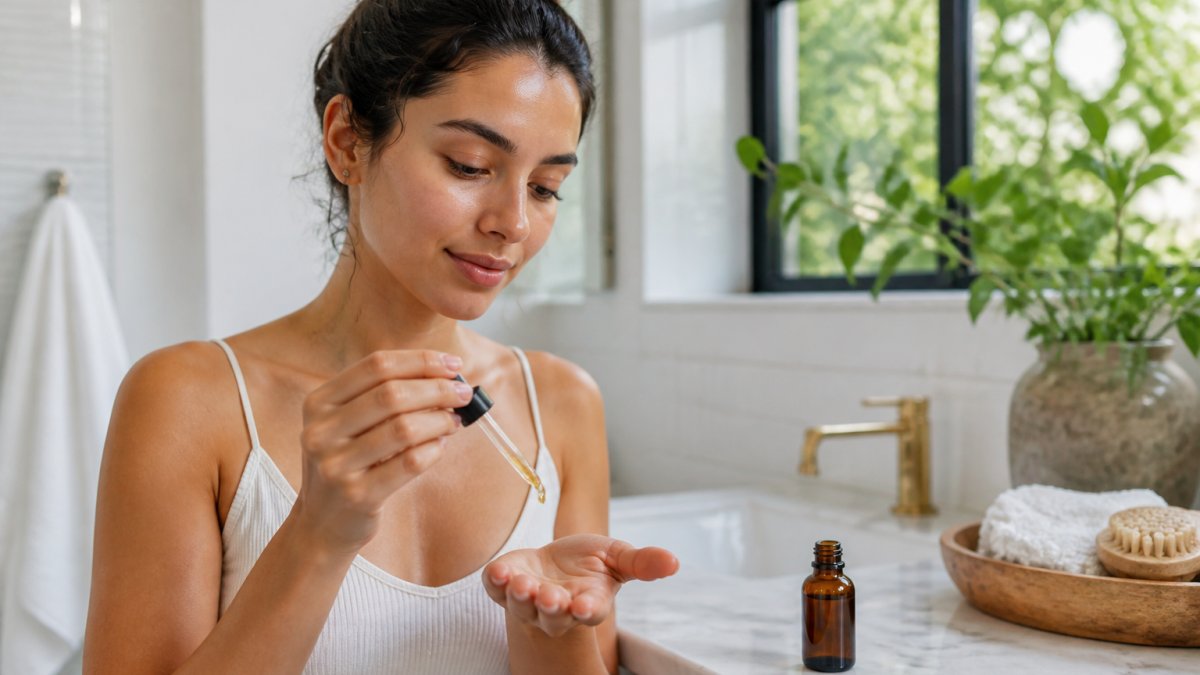
Learning how to apply black seed oil to face correctly takes about two minutes and prevents most of the irritation people blame on the oil itself. This sequence works standalone or as the final step in a layered routine.
- Cleanse and pat dry. Apply to clean skin, but leave it slightly damp. Damp skin absorbs oils more evenly.
- Warm 2-3 drops between your palms. More is not better. Start with two drops for the full face.
- Press, don't rub. Press the oil into your cheeks, forehead, and jawline with flat palms. Rubbing drags at the skin.
- Finish with the T-zone last. Use whatever remains on your hands, so the oiliest area gets the lightest layer.
- Wait 10 minutes before makeup or SPF. Give the oil time to settle so your next layer doesn't pill.
- Use it at night first. Evening application lets you spot any reaction before you wear it under sunscreen all day.
Patch Testing Before You Commit
Patch testing is the step almost everyone skips, and it prevents the worst outcomes. Apply one drop to the inside of your forearm or behind your ear, wait 24 hours, and stop if you see redness, itching, or swelling. Repeat on your jawline for another 24 hours before going full-face. (Source: the antioxidant and anti-inflammatory properties of thymoquinone)
Layering With Other Actives
Order matters: water-based products first, then black seed oil, then heavier occlusives. Avoid layering it in the same session as strong exfoliating acids or retinoids, since combining an oil with an active can increase irritation. Alternate nights instead.
Matching Black Seed Oil to Your Skin Type
Skin type is the biggest variable in whether black seed oil feels like a hero product or a breakout trigger. The oil is rich in linoleic acid and oleic acid, and those fatty acids behave differently depending on how much oil your skin already produces. Here is how to read your own skin before you commit.
Dry and Dehydrated Skin
Dry skin gets the most obvious benefit. Oleic acid is heavier and more occlusive, so it slows transepidermal water loss, the moisture that evaporates through the skin barrier. Apply two to three drops to slightly damp skin at night, then seal with a richer cream if your barrier feels tight. In low humidity or winter indoor heat, this is the skin type that tolerates the oil best and can often use it nightly.
Oily and Acne-Prone Skin
Oily skin can still use black seed oil, but dose is everything. Start with one to two drops at night, pressed into damp skin, and skip the T-zone the first week. The linoleic acid content is why it may help: acne-prone skin often shows lower linoleic acid levels in sebum, and a lighter, linoleic-rich oil can support healthier sebum composition without the heaviness of coconut oil or petrolatum.
Sensitive and Reactive Skin
Sensitive skin needs the patch test below before any full-face use, full stop. Botanical oils can trigger contact dermatitis even when cold-pressed and additive-free. Start with one drop on the jawline for two nights, then expand. If you have rosacea, eczema, or a diagnosed fragrance allergy, introduce the oil only after your barrier is calm, not during an active flare.
Combination Skin
Combination skin should treat zones differently: one drop on the T-zone, two to three on the cheeks and perimeter. Match the oil's richness to the area that needs it rather than applying a uniform layer across a face that produces oil unevenly.
Layering With Other Actives
This is where most guides stop short, and it is where irritation usually starts. Order matters: apply water-based products first, then black seed oil, then heavier occlusives. If you use prescription retinoids, adapalene, or high-strength AHAs and BHAs, do not layer them in the same session as black seed oil. Alternate nights instead, and give your skin a week to adjust to each new addition before combining.
Patch Testing Before You Commit
Patch testing is the step almost everyone skips, and it is the one that prevents the worst outcomes. Apply one drop to the inside of your forearm or behind your ear. Wait 24 hours. If you see redness, itching, or swelling, stop. Repeat the test on your jawline for another 24 hours before going full-face.
Side Effects, Storage, and Shelf Life
Topical black seed oil is generally well tolerated, but irritation is possible, especially with sensitive skin or a known allergy to Nigella sativa. Stop use if you develop persistent redness, itching, or swelling, and speak with a healthcare professional if symptoms do not resolve. If you are pregnant, breastfeeding, or taking prescription medication, talk to your clinician before adding any botanical oil to your routine.
How to Store Black Seed Oil
- Keep it in the original amber or dark glass bottle. Clear plastic lets light through and can leach over time.
- Store it in a cool, dark cabinet, not on a bathroom windowsill or above the stove. Heat speeds oxidation.
- Cap it tightly after every use. Oxygen is the other half of the oxidation equation.
- Skip the refrigerator unless the label says otherwise. Some cold-pressed oils thicken and become hard to dispense when cold, and repeated temperature swings are not helpful.
- Keep water out of the bottle. Do not dip wet fingers or a damp dropper into the oil.
How to Tell If It Has Gone Bad
Shelf life varies by brand and pressing method, so check the label for a specific date rather than assuming a fixed timeframe. A change in smell, a darker color, or a sticky texture means it is time to replace the bottle. Rancid oil often smells like old nuts or crayons rather than the peppery, slightly bitter scent of fresh black seed oil.
A Practical Rotation
If you use black seed oil nightly, a small bottle is usually the better buy, because you will finish it before oxidation sets in. Buy from a brand that lists a pressing or best-by date, and store the bottle like a fresh culinary oil. For current product details and ingredient sourcing, check Beach Goddess Skin Care's website.
Conclusion
Building a routine around a single botanical oil is simpler than managing ten half-used bottles, but it only works if the oil actually suits your skin. Beach Goddess Skin Care makes that easier with face tallow, body oils, and scrubs infused with high-end botanicals and essential oils, designed to replace the clutter on your counter with a curated, nature-inspired collection that brings the sunlit feel of the Islands into your daily routine.
Frequently Asked Questions
Can you put black seed oil on your skin?
Yes, black seed oil can be applied topically, but it should be diluted with a carrier oil like jojoba or sweet almond oil before use. Cold-pressed varieties retain more of the active compound thymoquinone. Always patch test on your inner forearm for 24 to 48 hours before applying to your face. If you have sensitive skin or a diagnosed skin condition, check with a dermatologist first.
What are the disadvantages of black seed oil on the face?
The most common issues are irritation, redness, and contact dermatitis, especially in people with sensitive skin. Black seed oil is not hypoallergenic, and some users react to its fatty acid profile. It can also feel heavy on oily or combination skin, and it is not a replacement for prescription treatments for moderate to severe acne or psoriasis. Start with a small amount and stop if irritation develops.
How long does black seed oil take to work on skin?
Some people notice less dryness and irritation within one to two weeks of regular use. For acne or eczema, visible changes typically take four to eight weeks because the skin cycle must complete at least once. Results vary by skin type, concentration, and how consistently you apply it. If you see no change after eight weeks, it may not be the right fit for your skin.
Is black seed oil suitable for all skin types?
It tends to suit dry, mature, and normal skin best because of its linoleic acid content. Oily and acne-prone skin can use it, but a lighter carrier oil or a smaller amount works better. Very sensitive or reactive skin should patch test carefully. Anyone with a known allergy to plants in the Ranunculaceae family should avoid it, and pregnant or nursing women should consult a doctor first.