
Table of Contents
- Does Tallow Clog Facial Pores? The Short Answer
- What Comedogenicity Means and Why It Matters
- Tallow's Fatty-Acid Profile and How It Compares to Sebum
- Beef Tallow as a Moisturizer: Benefits and Absorption
- Tallow Skincare for Acne-Prone Skin: What You Need to Know
- Product Quality, Formulation, and Pore Health
- What to Do If Tallow Causes Breakouts or Irritation
- Conclusion
- Frequently Asked Questions
Last Updated: October 8, 2026
Does Tallow Clog Facial Pores? The Short Answer
Tallow does not inherently clog pores, but whether tallow clog pores depends on product quality, your skin type, and the formulation. Poorly made tallow products, however, those with impurities, low-quality rendering, or added ingredients, can trigger breakouts in acne-prone skin. (Source: comedogenicity ratings)
The skincare industry often conflates tallow with pore-clogging risk without accounting for formulation quality. Beach Goddess Skin Care uses 100% natural tallow and oils with no synthetics, toxins, or unnatural preservatives. The products absorb deeply into skin layers instead of creating a barrier on top, which is why they reduce fine lines and keep skin soft and glowing with daily use.

Understanding whether tallow clog pores requires looking beyond a yes-or-no answer: comedogenicity ratings, fatty-acid composition, formulation, and individual skin responses all matter.
What Comedogenicity Means and Why It Matters
Comedogenicity measures how likely a substance is to clog pores and cause comedones (blackheads and whiteheads). The scale runs from 0 (non-comedogenic) to 5 (highly comedogenic), though not all products are formally tested.
Beef tallow typically rates as low-to-moderate on the comedogenic scale, depending on how it's rendered and processed. This rating exists because tallow contains fatty acids that can theoretically contribute to pore congestion, but the rating alone doesn't tell the whole story.
Comedogenicity ratings often rest on limited testing or outdated methods that ignore formulation differences, barrier health, and individual variation. A "non-comedogenic" product can still break out a compromised barrier, while a "moderately comedogenic" one may work beautifully on resilient skin.
What matters more than the rating itself is understanding what drives the rating. Tallow's fatty-acid profile is the key factor here.
Tallow's Fatty-Acid Profile and How It Compares to Sebum
Beef tallow is composed primarily of oleic, palmitic, and stearic acids, the same fatty acids found in human sebum. That similarity is why tallow has been used in skincare for centuries and doesn't feel foreign to skin the way synthetic silicones or mineral oil do.
Human sebum typically contains oleic acid, palmitic acid, and smaller amounts of stearic acid, and high-quality beef tallow mirrors this closely. When the profiles align, skin recognizes the tallow as compatible with its own lipid barrier, so it absorbs into skin layers rather than sitting on the surface.
This is fundamentally different from supermarket moisturizers, which use occlusive ingredients designed to sit on top of the skin and can trap bacteria and dead skin cells if not cleansed properly. Tallow instead integrates with the skin's natural lipid matrix.
Rendering matters enormously. Poorly rendered tallow carries impurities, oxidized fatty acids, residual proteins, and contaminants that irritate skin and trigger inflammation; careful heating, filtering, and cooling removes them, leaving pure fat with a stable fatty-acid profile. Beach Goddess Skin Care's face tallow is hand-crafted for purity, so it absorbs efficiently instead of creating congestion.

Beef Tallow as a Moisturizer: Benefits and Absorption
Tallow is a highly effective moisturizer because it mimics the skin's own lipid composition.
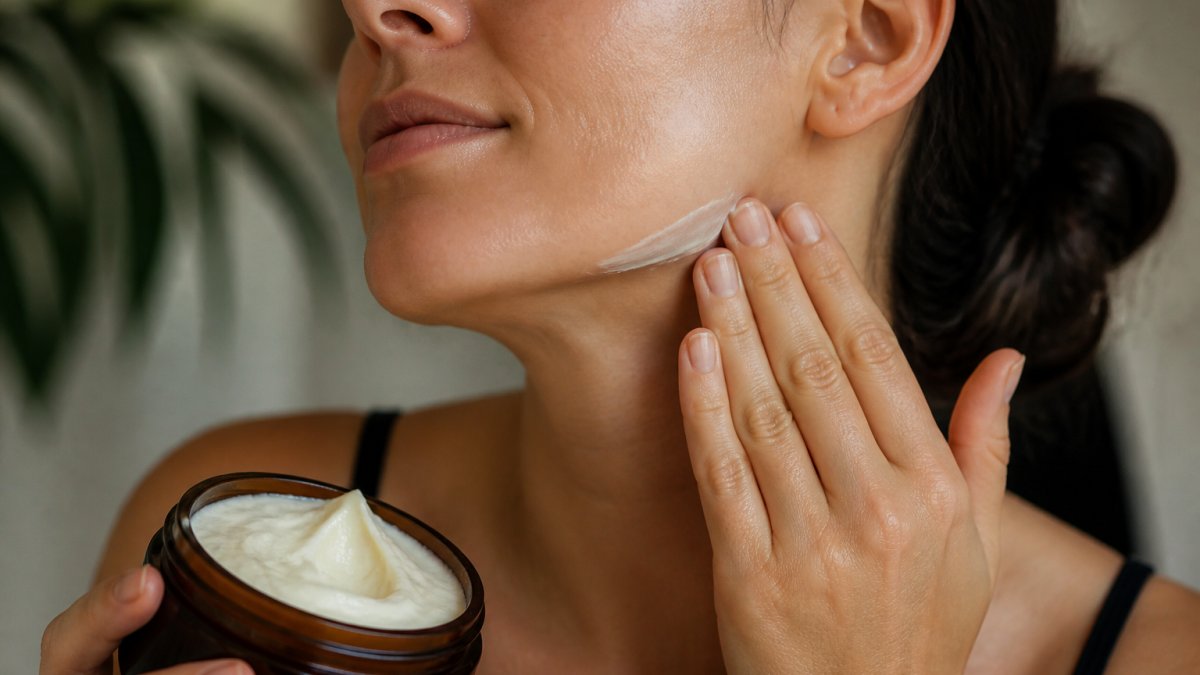
The benefits of tallow for facial skin include improved hydration, reduced fine lines, and a more resilient barrier.
Tallow also contains fat-soluble vitamins A, D, E, and K, which support skin health and reduce inflammation.
One common concern is that tallow will feel greasy. It depends on amount and skin type: a little goes a long way, and most people find a small amount of tallow facial oil or balm covers the entire face.
Tallow Skincare for Acne-Prone Skin: What You Need to Know
For acne-prone skin, tallow is neither automatically safe nor automatically clogging. What determines the outcome is the finished product sitting in the jar, not the word "tallow" on the label.
Start with concentration and base. A mostly-tallow product with a little light oil behaves very differently from one where tallow is a minor player in a heavy butter-and-wax blend.
Then look at the added oils. This is where most tallow products quietly change character.
Fragrance and essential oils deserve their own line item. Fragrance is one of the most common causes of contact irritation, and irritation can look exactly like a breakout, red, bumpy, and inflamed.
Skin type changes the math. Oily and combination skin tolerates less occlusive load than dry skin.
What the comedogenicity rating can and cannot tell you. Ratings are a starting point, not a verdict.
Where the clinical evidence actually stands. There is no large body of controlled human trials testing tallow on facial skin for acne outcomes. Most of what circulates online is anecdotal, brand-authored, or extrapolated from tallow's fatty-acid similarity to sebum, a reasonable hypothesis, not proof.
Beach Goddess Skin Care formulates with 100% natural tallow and oils, no synthetics, toxins, or unnatural preservatives, and vitamin E as the only preservative. The balms are built to absorb into the skin rather than sit on top like supermarket brands, which is the behavior that matters most when you are congestion-prone.
Product Quality, Formulation, and Pore Health
The difference between a tallow product that clogs pores and one that improves skin health comes down to formulation and sourcing. Several factors determine which way it goes:
Rendering quality directly affects purity. Tallow rendered at too-high temperatures develops pro-inflammatory oxidized fatty acids, while under-rendered tallow may retain impurities. Proper rendering, slow and careful, produces clean fat with stable fatty acids that won't trigger inflammation.
Grass-fed versus grain-fed matters because the fatty-acid profile differs. Grass-fed beef tallow contains more beneficial fatty acids like conjugated linoleic acid (CLA) and omega-3s, which support skin health and reduce inflammation. Grain-fed tallow has a less favorable profile for skincare.
Storage and stability affect whether tallow remains bioavailable or oxidizes over time. Store it cool and dark, ideally in glass; tallow exposed to heat, light, or air for extended periods can irritate skin.
Additional ingredients either enhance or undermine the tallow's benefits. Synthetic preservatives, fragrance chemicals, and fillers can trigger congestion, while natural botanical and essential oils, like those in Beach Goddess Skin Care's formulations, can reduce inflammation and support barrier health.
The most reliable way to assess a tallow product is to research how it's sourced, rendered, and formulated. Transparency signals that the maker understands the difference between quality tallow and low-grade alternatives.
What to Do If Tallow Causes Breakouts or Irritation
Most guides stop at "stop using it." That's not enough, because the two most common reactions to a new facial product, acne and irritation, look similar but need different responses. Getting the distinction right saves weeks of guessing.
Step 1: Stop the product, but change nothing else. Keep every other step of your routine identical, swap three products at once and you learn nothing.
Step 2: Identify what you are actually looking at.
- Irritation (contact dermatitis) tends to show up fast, often within hours to a few days, as redness, stinging, itching, dryness, or a rash-like texture. It can appear anywhere the product touched, including areas that are not typically acne-prone, like the cheeks or the sides of the face. Fragrance and essential oils are frequent culprits.
- Congestion (comedonal acne) develops more slowly, usually over 2 to 6 weeks, and shows up as blackheads, whiteheads, or small closed bumps in the areas where you normally break out. This pattern is consistent with a product that is too occlusive for your skin.
- Purging is a real but often overused explanation. True purging happens in the first few weeks, appears only where you already break out, and resolves as it goes. If bumps are appearing in brand-new locations, or getting worse after four weeks, that is not purging.
Step 3: Treat the reaction simply. For irritation, gentle cleansing, a bland moisturizer, and time are usually enough; stop exfoliating acids or retinoids until redness settles. For congestion, don't pick or extract, that's how a manageable breakout becomes a scar.
Step 4: Know when to escalate. See a dermatologist or other qualified clinician if any of the following apply:
- The reaction is spreading, blistering, or involves swelling around the eyes or mouth.
- You have painful, deep, cystic bumps rather than surface congestion.
- Symptoms have not improved after 4 to 6 weeks of stopping the product.
- You have a history of severe acne, rosacea, eczema, or perioral dermatitis.
- You are unsure whether what you are seeing is acne, irritation, or something else.
If your skin is reactive, a simpler formula is easier to troubleshoot. Beach Goddess Skin Care keeps its ingredient list to natural tallow and oils with no synthetics, toxins, or unnatural preservatives, vitamin E is the only preservative, so there are fewer variables to rule out if something goes wrong.
A note on expectations. A product that absorbs into the skin rather than sitting on top, like the natural tallows and oils in Beach Goddess Skin Care balms, is generally less likely to leave a heavy residue that traps debris. But "less likely" is not "never." Daily use of natural tallows and oils can reduce fine lines and keep skin soft, glowing, and toxin-free over time, get there by reading your skin's signals, not by pushing through a reaction.
Conclusion
Tallow does not inherently clog pores. High-quality beef tallow's fatty-acid profile closely mirrors human sebum, so it absorbs into the skin rather than sitting on the surface.
For most people, particularly those with dry or compromised skin, tallow offers significant benefits: improved hydration, reduced fine lines, and a stronger skin barrier.
The key is choosing tallow products made from high-quality, grass-fed beef that's properly rendered without synthetics or unnatural preservatives. Products formulated with botanical oils that support skin health rather than irritate it carry lower breakout risk.
If you're considering tallow skincare, start small, patch test, and give your skin time to adapt. Most people find high-quality tallow becomes a cornerstone of their routine, delivering the soft, glowing, toxin-free skin that daily use of natural oils and tallows can provide.
Frequently Asked Questions
What is the comedogenic rating of beef tallow?
Beef tallow typically rates 2 on the comedogenic scale (0-5, where 5 is most likely to clog pores), making it low-to-moderate risk. However, comedogenicity ratings are based on rabbit ear testing, not human facial skin, so they have real limits. Individual response varies by skin type, product formulation, and how much you apply. Grass-fed, rendered tallow of high quality poses lower risk than lower-grade alternatives because purity affects how your skin processes it.
Can I use tallow skincare for acne-prone skin?
Yes, but with caution. Tallow's fatty-acid profile resembles your skin's natural sebum, which can work well for some acne-prone individuals. The key is patch testing first on a small area, using a minimal amount, and monitoring for 1-2 weeks before full facial application. If you experience congestion, whiteheads, or increased breakouts, discontinue use. Beach Goddess Skin Care's Face Tallow is formulated with botanical oils and arnica, which may help reduce irritation, but individual skin chemistry always determines tolerance.
Why does tallow absorb into skin better than supermarket moisturizers?
Tallow's molecular structure closely matches your skin's natural lipids and sebum, allowing it to penetrate the outer layers rather than sitting on the surface. Supermarket lotions often rely on water and silicones that form a barrier on top of your skin instead of absorbing. Beach Goddess Skin Care's tallow and botanical oils soak deep into the skin, delivering nutrients and hydration without the heavy, greasy feeling of conventional products that don't match your skin's natural chemistry.
What should I do if tallow causes breakouts or irritation?
Stop using it immediately and switch to a gentle, non-comedogenic cleanser to remove any residue. If irritation persists beyond a few days, consult a dermatologist to rule out an allergic reaction. Breakouts can result from product quality, the amount applied, or your individual skin sensitivity. Start with a patch test on your inner arm or behind your ear for 24-48 hours before applying to your face. If you experience sensitivity to natural products in the past, introduce tallow slowly, perhaps 2-3 times per week, before daily use.