
Table of Contents
- Why Swap Synthetic Face Moisturizers for Natural Alternatives
- Natural Alternatives to Face Lotion: What Actually Works
- 1. Beach Goddess Face Tallow: A Tallow Face Moisturizer Built for Barrier Repair
- 2. Beach Goddess Blue Tansy Face Oil: Natural Face Oils for Moisturizing and Fine Lines
- 3. Beach Goddess Tide Pools Face and Beard Oil: A Natural Moisturizer for Dry Skin
- 4. Shea Butter and Coconut Oil Balms
- 5. Jojoba, Avocado, and Olive Oil Blends
- 6. Aloe Vera Gel and Waterless Balm Formulas
- How to Choose Among Natural Alternatives to Synthetic Face Moisturizers
- The Bottom Line on Natural Face Moisturizers
- Frequently Asked Questions
Last Updated: October 5, 2026
Why Swap Synthetic Face Moisturizers for Natural Alternatives
The top 7 natural alternatives to synthetic face moisturizers all share one trait: they feed the skin barrier instead of coating it. This guide from Beach Goddess Skin Care covers what each does, who it suits, and where it falls short.

Synthetic moisturizer refers to a formula built mainly from petrolatum, silicones, and lab-made emulsifiers.
Natural alternatives take a different route. The American Academy of Dermatology's guidance on moisturizer ingredients notes that emollients and occlusives both matter, but how they are delivered changes the result.
Below, seven options are ranked by how well they support a healthy moisture barrier, with honest notes on limits and skin type fit.
Natural Alternatives to Face Lotion: What Actually Works
Natural alternatives to face lotion fall into three functional groups: humectants pull water into the skin, emollients fill the gaps between skin cells, and occlusives seal the surface to slow water loss.
Most single-ingredient products do one job well. Blended formulas, like the ones from Beach Goddess Skin Care, combine all three so the barrier gets support at every layer.

Humectants, Emollients, and Occlusives Explained
Humectants attract and hold water. Common examples include aloe vera gel and glycerin.
Emollients soften and smooth by filling microscopic gaps in the skin. Jojoba, avocado, and olive oils are classic emollients.
Occlusives form a breathable seal that reduces transepidermal water loss. Shea butter, coconut oil, and tallow act here. A well-built natural face moisturizer pairs all three.
1. Beach Goddess Face Tallow: A Tallow Face Moisturizer Built for Barrier Repair
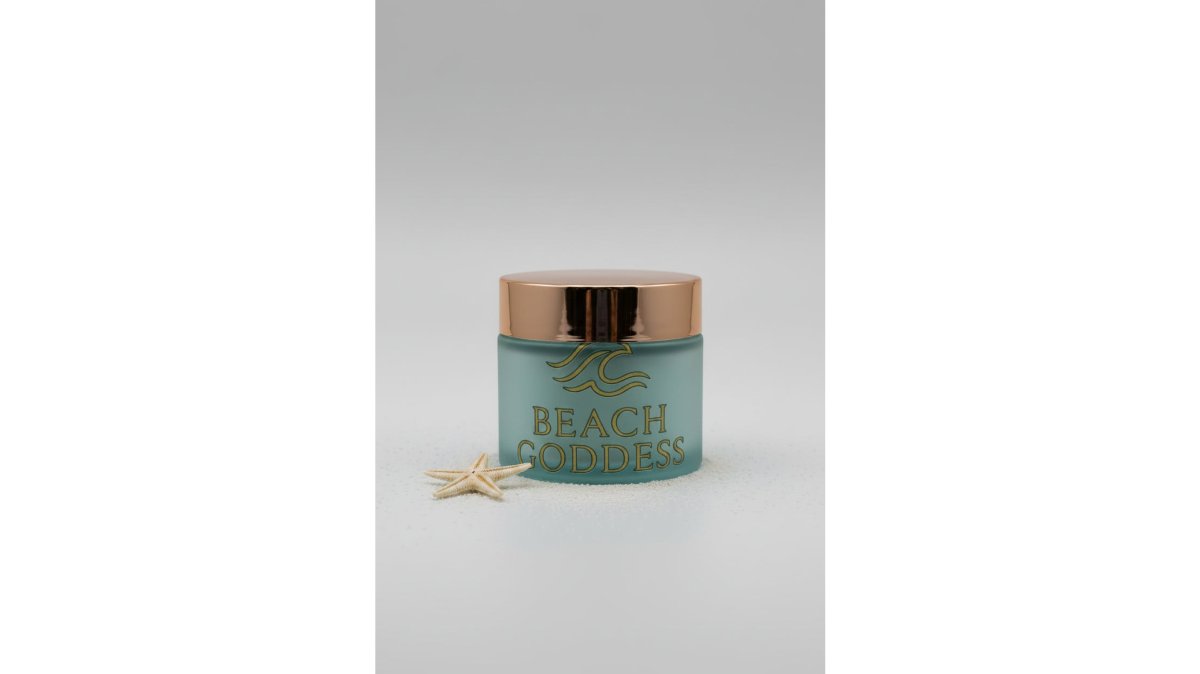
A tallow face moisturizer is the closest match to the skin's own lipid profile, which is why it leads this list. Beach Goddess Face Tallow is a smooth, creamy balm made from grass-fed tallow infused with six botanical oils, blue tansy, and arnica.

[IMAGE: Close-up of a woman's fingertips scooping creamy white tallow balm from a small amber glass jar on a bathroom counter, with a soft towel and a sprig of dried botanicals nearby in warm natural light | section:1.
What separates it from supermarket creams is absorption. The tallow and oils soak into the layers of the skin rather than sitting on top, so skin feels soft and hydrated instead of greasy.
The one honest limitation: tallow is animal-derived, so it will not suit vegan routines. For dry, reactive, or barrier-compromised skin, few natural options come close.
2. Beach Goddess Blue Tansy Face Oil: Natural Face Oils for Moisturizing and Fine Lines
Natural face oils for moisturizing work best when they carry active botanicals, not just carrier oils. Beach Goddess Blue Tansy Face Oil is a lightweight blend of six botanical oils with arnica and paracress flower oil, priced at $32.00 for 3 oz.
The formula targets fine lines and helps relax facial muscles, which is where the paracress comparison comes from. A few drops massaged into the face and neck absorb quickly and leave a fresh finish rather than a heavy film.
What Six Botanical Oils and Blue Tansy Do for Your Skin
Each oil plays a role: some deliver essential fatty acids that support the moisture barrier, others act as antioxidants against daily environmental stress, and blue tansy adds a calming quality for skin that reddens easily.
For anyone comparing natural alternatives to synthetic face moisturizers, this is the pick for fine lines and a light feel. Oily and combination skin tend to prefer it over a balm.
3. Beach Goddess Tide Pools Face and Beard Oil: A Natural Moisturizer for Dry Skin
A natural moisturizer for dry skin does not have to be heavy, and Tide Pools proves the point. This face and beard oil blends six botanical oils with paracress flower oil and a warm amber scent.
The texture is light enough for daily facial use and rich enough for beard hair, which tends to be coarser and drier than skin.
Where it falls short: the amber scent is noticeable. Anyone who prefers fragrance-free skincare should patch test first.
4. Shea Butter and Coconut Oil Balms
Shea butter and coconut oil balms are the most accessible entry point into natural moisturizing, and the most misunderstood.
Shea butter is pressed from shea tree nuts and is roughly half stearic and oleic fatty acids, with unsaponifiables that give it a thick, cushiony melt point near body temperature.
Coconut oil is a solid below about 76°F and melts almost instantly on skin.
How These Balms Compare on the Face
| Ingredient | Role | Texture | Best Use | Watch Out For |
|---|---|---|---|---|
| Shea butter | Occlusive + emollient | Thick, cushiony | Body, night layer, dry patches | Heavy for oily skin |
| Coconut oil | Occlusive | Light going on, waxy finish | Body, cleansing, very dry patches | High comedogenic risk for many |
A practical pattern most people land on: keep these balms for the body, elbows, knees, and heels, and reach for a facial-specific formula for the face. If you do use them on the face, apply a thin layer over damp skin at night and give it a week before deciding.
Why a Facial-Specific Formula Often Wins
The limitation of a single butter or oil is that it does one job. Shea and coconut seal the surface, but they do not deliver the range of fatty acids and antioxidants a blended facial formula can.
Price is another reason these balms stay popular. Compare cost per ounce rather than per jar, and remember that a little goes a long way.
5. Jojoba, Avocado, and Olive Oil Blends
Jojoba, avocado, and olive oil blends sit in the middle ground between light oils and heavy balms. Jojoba is technically a liquid wax, and its structure is close to human sebum, so it absorbs without a greasy residue.
A single-ingredient oil is cheap to try but limited. A blend balances absorption and richness. This is also where comedogenicity matters most, so the next section breaks it down by oil.
Comedogenicity: Which Plant Oils Suit Acne-Prone Skin
Comedogenicity describes how likely an ingredient is to clog pores. Oils sit on a scale, not a yes-or-no list.
- Low risk: jojoba, hemp seed, and squalane tend to suit acne-prone skin
- Moderate risk: avocado and sweet almond work for most, but not all
- Higher risk: coconut oil and wheat germ oil clog pores for many people
Patch test on the jawline for a week before committing to a full-face application. Non-comedogenic does not mean universally safe, and a low-risk oil can still irritate sensitive skin.
6. Aloe Vera Gel and Waterless Balm Formulas
Aloe vera gel and waterless balm formulas represent two opposite ends of the hydration spectrum. Aloe is a pure humectant: it pulls water into the skin and feels cooling, but it evaporates without an occlusive layer on top.
For very dry skin, aloe alone is not enough. Layer it under a balm or oil. For oily skin in humid weather, aloe can be sufficient on its own.
How to Choose Among Natural Alternatives to Synthetic Face Moisturizers
Choosing comes down to four questions: how dry is the skin, how reactive is it, what climate will the product live in, and how does it layer with the rest of the routine. Answering all four separates a product that works from one that sits unused on the shelf.
Step 1: Match the Formula to Skin Type
| Option | Best For | Key Strength | Watch Out For |
|---|---|---|---|
| Face Tallow | Dry, barrier-compromised skin | Absorbs deeply, supports repair | Not vegan |
| Blue Tansy Face Oil | Fine lines, normal to oily skin | Lightweight, quick absorption | Light scent |
| Tide Pools Face and Beard Oil | Dry skin, beard care | Multi-use, amber scent | Fragrance-sensitive users |
| Shea and Coconut Balms | Body, dry patches | Widely available, affordable | Comedogenic on face |
| Jojoba, Avocado, Olive Blends | Most skin types | Customizable, sebum-like | Quality varies by brand |
| Aloe and Waterless Balms | Oily skin, humid climates | Cooling, preservative-light | Aloe needs sealing |
Step 2: Account for Climate and Season
A formula that feels perfect in July can feel thin in January. In low humidity and cold weather, humectants like aloe and glycerin can pull water out of the skin if nothing seals them in, so pair them with an occlusive. In humid weather, heavy balms can feel suffocating and may contribute to congestion, so a light oil or aloe layer is often enough.
Step 3: Layer With Sunscreen and the Rest of Your Routine
Order matters. Apply the lightest product first and the heaviest last: cleanser, then any water-based serum or aloe, then oil, then balm. Sunscreen goes on last in the morning, after the moisturizer has had a minute to settle. Oils can break down some sunscreen films, so let the oil absorb fully before applying mineral sunscreen. At night, a balm or tallow layer over a lighter oil seals everything in.
Step 4: Patch Test Before You Commit
Patch testing is the step most people skip and the one that prevents the most trouble. Botanicals, fragrance, and food-derived ingredients can trigger irritation even in people who have never reacted before.
- Apply a small amount to the inner forearm or behind the ear.
- Wait 24 hours and check for redness, itching, or swelling.
- If clear, apply to a small area of the jawline for three to five nights.
- If still clear, introduce it to the full face, one new product at a time.
Introduce one item at a time so a reaction can be traced to its source. If irritation persists after you stop using the product, consult a qualified professional.
A Note on Evidence and Expectations
Most natural moisturizers have less published research behind them than conventional formulas, and much of what exists is small or short-term. That does not make them ineffective, but claims should be read with realistic expectations. What is well established is the basic mechanism: humectants, emollients, and occlusives each support hydration differently, and a formula covering all three tends to outperform a single ingredient.
The Bottom Line on Natural Face Moisturizers
The strongest natural routines pair a humectant, an emollient, and an occlusive rather than relying on one ingredient. Tallow and botanical oil blends cover all three in a single step, which is why they absorb instead of sitting on the surface. Daily use of natural tallows and oils can soften fine lines and keep skin soft and glowing without synthetic additives.
Frequently Asked Questions
What is the most effective natural moisturizer for the face?
There is no single winner, because effectiveness depends on your skin barrier and climate. Tallow-based balms and botanical oil blends work well for dry or reactive skin because their fatty acids sit close to the lipids your skin already makes. Lightweight oils such as jojoba suit oily and combination skin. A good natural face moisturizer should absorb rather than sit on top, and you should see softer, calmer skin within two to three weeks of daily use.
Can you use natural face oils for moisturizing instead of cream?
Yes, and many people prefer it. Oils act as emollients and occlusives, sealing in water and smoothing rough texture. The catch is that oil alone does not add water, so if your skin is dehydrated, apply oil to slightly damp skin after cleansing. Beach Goddess Blue Tansy Face Oil is a lightweight option for this, while richer balms suit very dry skin. Oily and acne-prone skin should start with a few drops and build up.
Is tallow a good natural face moisturizer for sensitive skin?
Tallow is rich in fatty acids that closely match human sebum, which is why many people with sensitive skin find it calming rather than irritating. Beach Goddess Face Tallow is infused with six botanical oils plus blue tansy and arnica, and contains no synthetic fragrance or unnatural preservatives. That said, sensitive skin varies, so patch-test on your inner forearm for 48 hours before applying to your face, and stop if you notice redness or stinging.
How do you choose a natural moisturizer for dry skin?
Look for occlusive and emollient ingredients first: tallow, shea butter, jojoba, avocado, and olive oil all help slow water loss through the moisture barrier. Avoid formulas that are mostly water and alcohol, since they evaporate and can leave skin tighter. A waterless balm or a concentrated oil blend usually gives dry skin more lasting comfort. Apply within a minute of washing your face, while skin is still damp, to lock in hydration.
What is a good 100% natural moisturizer if I have acne-prone skin?
Choose low-comedogenic options and keep the routine simple. Jojoba oil, which is technically a wax ester, is one of the least likely plant oils to clog pores. Coconut oil is heavier and ranks higher on comedogenicity scales, so it suits the body better than the face. Whatever you pick, introduce one product at a time and give it two weeks. If you develop new breakouts, scale back rather than adding more products.