
Table of Contents
- What Is Tallow and Honey Balm?
- Benefits of Tallow and Honey Balm for Skin
- How to Make a Homemade Tallow Honey Balm
- Using Tallow Balm for Face: A Simple Daily Routine
- Tallow Balm for Dry Skin and Sensitive Skin
- Tallow Balm Shelf Life and Storage Tips
- Conclusion
- Frequently Asked Questions
Last Updated: October 14, 2026
What Is Tallow and Honey Balm?
Tallow and honey balm is a thick, nutrient-rich skin moisturizer made from rendered beef fat and raw honey. The fat comes from cattle raised on pasture, and the honey adds humectant power that pulls water into the skin.
Beach Goddess Skin Care built its face tallow line around this same idea: few ingredients, no synthetics, and a texture that sinks in. The balm works because tallow's fat profile closely matches the fats in human skin.

That similarity matters. Most drugstore moisturizers rely on water, alcohol, and synthetic thickeners. They sit on the surface and evaporate. A tallow and honey balm absorbs instead, feeding the skin barrier rather than coating it.
Why Tallow and Honey Work Together
Tallow is rich in vitamins A, D, E, and K. Its fatty acids mirror the lipids your skin already makes, so the body recognizes and uses them.
Honey does the opposite job. It is a humectant, meaning it draws moisture from the air into the skin. Raw honey also contains natural enzymes and antioxidants.
One ingredient seals in moisture. The other pulls it in. That pairing is why a tallow and honey balm feels different from a plain fat or a plain honey mask.
Benefits of Tallow and Honey Balm for Skin
The biggest benefit is deep moisture without a greasy film. Tallow absorbs into the layers of the skin instead of sitting on top, which is the main complaint people have about heavy creams.
Other benefits many users notice:
- Softer, smoother skin
- Less visible fine lines as the skin stays hydrated
- A stronger barrier against wind, cold, and dry indoor heat
- Fewer products needed, since one balm covers face, hands, and body
The American Academy of Dermatology guidance on moisturizing notes that keeping the skin barrier healthy is the foundation of any routine. A simple balm that supports that barrier can do more than a shelf full of products.
One honest limitation: tallow balm is not a treatment for a diagnosed skin condition. It is a moisturizer. Anyone with a medical concern should see a dermatologist.
How to Make a Homemade Tallow Honey Balm
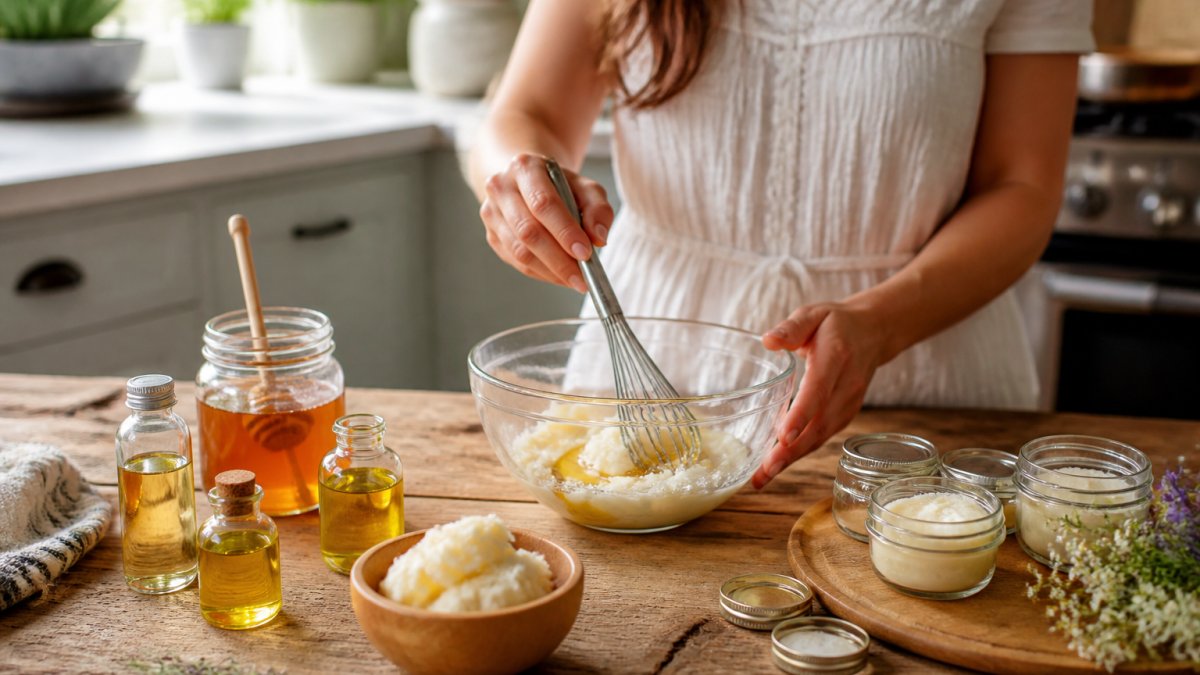
A homemade tallow honey balm takes about 30 minutes of active work and uses five ingredients or fewer. The key is low, steady heat, clean tools, and getting the honey blended before the fat sets. Rancid fat or contaminated jars ruin the batch, so handle it like food.
Ingredients and Equipment
Gather everything before you start. A double boiler or a heat-safe bowl over a pot of water works best.
- 1/2 cup (about 4 oz) grass-finished beef tallow, suet-based if possible
- 2 tablespoons raw honey
- 1 tablespoon olive oil or another organic oil
- Optional: 1 teaspoon beeswax for a firmer balm
- Optional: a few drops of vanilla or frankincense for scent
- Glass jars, a whisk, and a kitchen scale
Step-by-Step Instructions
- Sterilize your jars and tools in hot water, then let them air dry completely. Any water left in the jar can seed mold in a balm that has no synthetic preservatives.
- Melt the tallow and beeswax in the double boiler over low heat. Keep the water below a gentle simmer and the fat between 140°F and 160°F. Tallow melts around 95°F to 110°F, so it does not need high heat to turn liquid.
- Stir in the olive oil until fully blended.
- Remove from heat and let it cool to about 120°F to 130°F. This is the window where honey will blend without scorching.
- Whisk in the honey until the mixture looks smooth and even. Whisk steadily for a full minute rather than a few quick strokes.
- Pour into jars and let them set at room temperature, undisturbed, for several hours.
- Cap and label with the date.
Getting the Honey to Blend
Honey is water-based and tallow is fat-based, so the two do not naturally combine. Without an emulsifier, honey will settle or bead over time. A few practical fixes:
- Warm the honey slightly before adding it so it flows instead of clumping.
- Whisk hard and fast at the 120°F to 130°F window, when the fat is still fluid but not hot enough to scald the honey.
- If the batch separates, warm the jar gently in a bowl of warm water and stir again. A small amount of separation is normal in a natural balm with no synthetic emulsifiers.
- If the texture turns grainy as it cools, that is usually the tallow re-crystallizing. A brief re-melt and stir will smooth it out.
Clean Handling and Shelf Life
Because a homemade balm has no synthetic preservatives, clean technique matters more than any single ingredient.
- Use dry, sterilized jars and tools. Water is the main spoilage risk.
- Never dip fingers into the master jar. Scoop with a clean spatula into a smaller use jar.
- Store in a cool, dark cabinet. For longer storage, keep a small jar in use and refrigerate the rest.
- Expect roughly 6 to 12 months of quality when stored well. Signs of spoilage include a sharp or crayon-like smell, a color shift toward dark yellow or brown, or a gritty texture that was not there before.
Substitutions and Variations
- Vegan or plant-based: replace tallow with shea butter or cocoa butter. The balm will be softer and less shelf-stable, so add beeswax or a plant wax to firm it.
- Fragrance-free: skip essential oils entirely. This suits reactive skin best.
- Firmer balm: add an extra teaspoon of beeswax.
- Softer balm: reduce beeswax or omit it and use a liquid oil at room temperature.
Each substitution changes consistency, so test small batches before committing to a full jar. (Source: National Honey Board's information on honey's properties)
Using Tallow Balm for Face: A Simple Daily Routine
A tallow balm for face use fits into two short steps, morning and night. Warm a pea-sized amount between clean fingertips and press it into damp skin. Damp skin helps the honey pull in moisture.
A simple routine looks like this:
- Morning: rinse with lukewarm water, apply balm, then sunscreen
- Evening: cleanse gently, apply balm while skin is still damp
- Extra: add a thin layer on rough spots, elbows, and hands
For anyone coming from a ten-step routine, this feels strange at first. That is the point. Fewer products mean less chance of irritation and a clearer view of what actually helps.
Beach Goddess Skin Care's Face Tallow follows this approach with a smooth, creamy texture and six botanical oils, including blue tansy and arnica. It is lightly scented, absorbs quickly, and comes in a 2 oz jar. A jar lasts about a month when used morning and night.
Tallow Balm for Dry Skin and Sensitive Skin
Tallow balm for dry skin works because the fats in tallow replace what dry skin is missing. People with sensitive skin often do well with it too, since it has no synthetic additives or added fragrance. Beach Goddess Skin Care products are 100% natural tallow and oils with no synthetics, toxins, or unnatural preservatives, and they absorb into the skin instead of sitting on top like supermarket brands.
That said, sensitive skin still needs caution. A patch test is not optional.
- Apply a small amount to the inner forearm
- Wait 24 hours and check for redness or itching
- If the skin stays calm, try it on the jawline next
- Wait another day before using it on the full face
Who Should Be Careful
A natural ingredient list does not mean an ingredient is safe for everyone. A few groups should take extra care:
- Bee product allergies: honey, beeswax, and propolis can trigger reactions in anyone allergic to bee stings or bee products. Skip honey-based balms if this applies to you.
- Beef or dairy allergy: tallow comes from cattle, so anyone with a beef allergy should talk to a doctor before using it.
- Fragrance and botanical sensitivity: essential oils and botanicals like blue tansy or arnica can irritate reactive skin. Fragrance-free formulas are the safer starting point.
- Compromised or broken skin: a balm can trap bacteria on open cuts or active rashes. Wait until the skin has healed.
Fragrance-Free and Substitution Options
If a scented balm causes irritation, you do not have to give up on tallow. Options include:
- Choose an unscented version with no added essential oils.
- Make a home batch and leave out the fragrance entirely.
- Test one new botanical at a time so you can tell which ingredient caused any reaction.
- For plant-based needs, swap tallow for shea or cocoa butter, though the texture and shelf life will change.
What a Balm Can and Cannot Do
A tallow and honey balm is a moisturizer. It can soften dry, rough, or weather-stressed skin and support the skin barrier with daily use, which can reduce the look of fine lines over time. Anyone with a medical concern should see a dermatologist rather than rely on a balm.
Tallow Balm Shelf Life and Storage Tips
Tallow balm shelf life runs about 6 to 12 months when stored well. Heat, light, and air are the enemies. A cool, dark cabinet beats a steamy bathroom shelf every time.
Signs a batch has gone bad:
- A sharp, sour, or crayon-like smell
- A change in color toward dark yellow or brown
- A gritty or grainy texture that was not there before
Vitamin E is a common natural preservative that slows rancidity. Beach Goddess Skin Care uses vitamin E as its only preservative, which keeps the ingredient list short without synthetics.
For longer storage, keep a small jar in use and store the rest in the fridge. Let it warm to room temperature before applying.
Conclusion
Skin that stays soft, glowing, and free of harsh additives comes down to a short, honest routine. A tallow and honey balm covers most of it: moisture, barrier support, and a texture that sinks in instead of sitting on top. Start with a patch test, keep the batch clean, and store it cool. For anyone who wants to simplify the counter and skip the synthetics, Beach Goddess Skin Care's tallow and botanical oil products offer a natural place to begin.
Frequently Asked Questions
What is tallow and honey balm used for?
Tallow and honey balm is a multi-purpose moisturizer for dry, rough, or weather-stressed skin. Use it on your face, hands, elbows, knees, and anywhere skin feels tight or flaky. The tallow provides vitamins A, D, E, and K. Many people use it as a night cream, lip balm, or after-sun treatment. A little goes a long way, so start with a pea-sized amount and adjust as needed.
Is tallow and honey balm suitable for sensitive skin?
It can be suitable for many people with sensitive skin because it uses minimal ingredients and no synthetic additives. However, everyone reacts differently. Always patch test on your inner arm for 24 hours before applying to your face. If you have known allergies to bee products or specific oils, check the ingredient list carefully. Beach Goddess Skin Care's Face Tallow uses six botanical oils and blue tansy, but consult a dermatologist if you are unsure.
How long does tallow balm last?
Homemade tallow balm typically lasts 6 to 12 months when stored in a cool, dark place. Shelf life depends on the oils used. Signs of spoilage include a rancid smell, changed color, or unusual texture. For store-bought options, follow the expiration date on the label. Beach Goddess Skin Care handcrafts each jar when you order, so it arrives fresh.
Can you use tallow and honey balm on your face?
Yes, tallow balm for face is one of its most popular uses. The fats in tallow resemble those in human skin, so it absorbs deeply instead of sitting on top. Apply a small amount to clean, damp skin morning and night. If you have combination skin, focus on dry areas and use a lighter layer on your T-zone. Beach Goddess Skin Care's Face Tallow is made specifically for facial use and comes in a 2 oz jar that lasts about a month with twice-daily use.