
Table of Contents
- Does Tallow Skincare Cause Breakouts? The Short Answer
- Does Beef Tallow Clog Pores? Comedogenicity Explained
- Beef Tallow for Acne-Prone Skin: Who Benefits and Who Should Skip It
- Beef Tallow Skincare Side Effects: What Can Actually Happen
- How to Patch Test Beef Tallow Before Using It on Your Face
- Tallow Skincare vs. Conventional Acne Treatments: What the Evidence Shows
- Choosing a Tallow Product: Formulation, Quality, and Storage
- Conclusion: Making a Confident Decision About Tallow Skincare
- Frequently Asked Questions
Last Updated: October 16, 2026
Does Tallow Skincare Cause Breakouts? The Short Answer
Tallow skincare does not cause breakouts for everyone, but it can clog pores and trigger acne for some skin types, depending on sebum production, pore size, and formulation. This guide from Beach Goddess Skin Care examines the evidence, the risks, and how to test tallow skincare on your own face.
The short answer is unsatisfying: it depends. According to the American Academy of Dermatology's guidance on moisturizer selection, matching a moisturizer to your skin type matters more than the ingredient's reputation in either direction.
Why the Answer Depends on Your Skin, Not the Ingredient Alone
Three variables decide whether tallow helps or hurts your face. Baseline oil production: oily skin already has plenty of sebum, so a rich fat can tip pores toward congestion. Acne type: clogged-pore acne responds differently than inflammatory or cystic acne.
A common mistake is treating "natural" as a synonym for "non-comedogenic." Coconut oil is natural and highly comedogenic for many people; shea butter can congest pores at high concentrations.
Does Beef Tallow Clog Pores? Comedogenicity Explained
Comedogenicity is an ingredient's tendency to block pores by trapping dead skin cells, sebum, and debris inside the follicle. Beef tallow's comedogenic rating is debated because ratings are assigned to isolated fatty acids tested on rabbit ears, not to finished tallow balms tested on human faces.
Oleic acid, one of tallow's dominant fatty acids, tends to be more comedogenic than linoleic acid. Acne-prone skin often has sebum lower in linoleic acid and higher in oleic acid, which is why heavy, oleic-rich oils can worsen congestion in that group.
The practical takeaway: if your skin leans oily and you clog easily, a rich tallow balm used across your whole face is a genuine risk. Used sparingly on dry patches, the same product may cause no trouble at all.
Clogged-Pore Acne vs. Inflammatory and Cystic Acne
Distinguishing acne types changes how you interpret a reaction. Clogged-pore acne shows up as blackheads and closed whiteheads and responds directly to what you put on your skin. Inflammatory acne presents as red, tender papules and pustules, often driven by C. acnes bacteria inside blocked follicles.
If a product causes trouble, it usually triggers the first category: new blackheads or small closed bumps along the jaw, forehead, or cheeks within one to two weeks.
Beef Tallow for Acne-Prone Skin: Who Benefits and Who Should Skip It
Beef tallow for acne-prone skin suits some people and not others. The dividing line is usually oil production and pore behavior, not acne severity alone.
Tallow tends to work well for:
- Dry or dehydrated skin with a compromised barrier
- Mature skin where fine lines and tightness are the main concern
- Skin that reacts badly to synthetic preservatives and fragrance
Tallow is usually the wrong choice for:
- Consistently oily skin with visible shine by midday
- Skin that clogs within days of trying rich creams or oils
- Active inflammatory or cystic acne under dermatologist care
Beef Tallow Skincare Side Effects: What Can Actually Happen
Beef tallow skincare side effects fall into four categories, and telling them apart determines what you do next.
Irritation shows up as redness, stinging, or warmth shortly after application, usually driven by added essential oils, botanical extracts, or fragrance rather than the tallow itself.
The fourth category is purging, the one most often misidentified. Purging happens when an active ingredient speeds cell turnover and pushes existing clogs to the surface; it stays within areas you normally break out and resolves gradually.
| Reaction | Timing | Location | What It Means |
|---|---|---|---|
| Purging | 2-6 weeks | Usual breakout zones | Existing clogs surfacing; often settles |
| Pore congestion | 1-3 weeks | Where product applied | Product too heavy for your skin |
| Irritation | Minutes to hours | Contact area | Added ingredient sensitivity |
| Allergic reaction | Hours to 2 days | Contact area, may spread | Stop use; consider patch testing |
How to Patch Test Beef Tallow Before Using It on Your Face
Learning how to patch test beef tallow takes about two weeks.
Step 1: Test on your inner forearm first. Apply a small amount twice daily for three days.

Step 2: Move to a small facial area. Choose one cheek or your jawline, not your whole face.
Step 4: Track what you see. Note new blackheads, closed bumps, redness, or itching, and where they appear.
A 14-Day Controlled Trial and When to Stop
Days one through three are your forearm check. Days four through fourteen are your facial trial on a limited area. Keep the rest of your routine unchanged so you can attribute any change to the tallow.
Stop immediately if you develop itching, swelling, a spreading rash, or pain. Stop at day fourteen if you see steadily worsening congestion in the test area.
Tallow Skincare vs. Conventional Acne Treatments: What the Evidence Shows
Tallow skincare and conventional acne treatments are not competing on the same field. Established treatments such as benzoyl peroxide, salicylic acid, adapalene, and prescription retinoids have decades of clinical research and measurable effects on acne lesions.
The clearest way to see the difference is to separate what each product is actually doing.
| Product | Primary job | Typical timeline | Main trade-off |
|---|---|---|---|
| Benzoyl peroxide | Kills C. acnes bacteria inside the follicle | Days to a few weeks | Dryness, peeling, bleached fabric |
| Salicylic acid | Dissolves clogs inside the pore lining | 2-4 weeks | Irritation if overused, especially with other actives |
| Adapalene | Normalizes how follicular cells shed, prevents new clogs | 8-12 weeks | Purge period, sun sensitivity, dryness |
| Prescription retinoids | Same mechanism as adapalene, stronger | 12 weeks or more | Significant irritation, needs dermatologist guidance |
| Tallow balm | Supports the skin barrier, reduces water loss | Immediate comfort, no acne effect | Can congest pores in oily or clog-prone skin |
Read that table as roles, not rankings. A benzoyl peroxide wash does not moisturize, and a tallow balm does not kill bacteria.
Where Tallow Actually Fits in an Acne Routine
If you are using an evidence-based acne treatment, tallow can play a supporting role.
The treatment does the active work, and the moisturizer keeps skin comfortable enough to tolerate it.
If you want to layer tallow with an active, a reasonable order is: cleanse, apply the active to dry skin, wait a few minutes, then apply a thin layer of tallow balm.
The Evidence Question, Stated Plainly
- What is well established: Benzoyl peroxide, salicylic acid, adapalene, and prescription retinoids have clinical trial evidence for reducing acne lesions. Their mechanisms, timelines, and side effects are documented.
- What is plausible but not clinically proven for acne: Tallow's ability to reduce transepidermal water loss and support the barrier is consistent with its fatty acid composition and with how occlusive ingredients behave in general. That is ingredient theory, not a clinical trial on acne.
- What is essentially anecdotal: Claims that tallow clears acne, balances sebum, or replaces a treatment routine. These come from user reports and marketing, not controlled studies.
There is no large clinical trial specifically testing topical tallow on acne-prone facial skin. That absence cuts both ways: nobody can promise tallow will clear your skin, and nobody can claim it will break you out either. What you can do is reason from mechanism and test on your own face.
Tallow is a moisturizer, not an acne treatment. Use it to support the barrier while an evidence-based active does the clearing work, and judge it on comfort and congestion, not on whether it resolves active acne.
When Tallow Is the Wrong Tool Entirely
If your acne is moderate to severe, cystic, or leaving marks and scars, moisturizer choice is not the variable that matters most. Inflammatory and cystic acne is driven by hormones, genetics, and bacterial colonization deep in the follicle, factors a topical balm does not reach.
For mild, product-triggered congestion in someone with otherwise calm skin, the calculus is different. There, a short ingredient list and a careful patch test may be all the guidance you need.
Choosing a Tallow Product: Formulation, Quality, and Storage
Formulation decides most of the risk, and the ingredient list is where you find it. Two products can both say "tallow balm" on the front label and behave completely differently on the same face. The tallow is rarely the variable that causes a reaction, what surrounds it usually is.
The Ingredients That Actually Change Tolerability
When you read a tallow product's ingredient list, these are the categories worth scrutinizing:
- Added fragrance and synthetic perfume. Fragrance is one of the most common causes of contact irritation and allergic reaction in skincare. A tallow balm that smells strongly of perfume is a different risk profile than one that smells faintly of its own ingredients.
- Essential oils. Natural does not mean non-irritating. Essential oils such as citrus, peppermint, eucalyptus, lavender, and tea tree can cause irritation or sensitization, especially on compromised or acne-prone skin. Blue tansy and arnica, used at low levels, are generally better tolerated, but concentration matters.
- Heavy added butters and oils. Shea butter, cocoa butter, and coconut oil are natural and can be highly comedogenic for some people. A tallow balm loaded with these behaves more like a heavy butter than like tallow alone.
A short ingredient list is easier to evaluate when you are trying to isolate what your skin reacts to. If a product has thirty ingredients and you break out, you have no way to know which one did it.
Quality, Sourcing, and Storage
Quality and hygiene matter as much as the ingredient list. Tallow is a fat, and fats go rancid when exposed to heat, light, and air. Rancid fat smells sharp, sour, or crayon-like, and applying it to your face is a genuine irritation risk.
- Store jars away from direct sunlight and out of warm bathrooms.
- Keep fingers out of the container where possible, use a clean spatula or scoop.
- Never share a jar you apply with your fingers.
Sourcing matters too: how the fat was rendered and whether it was mixed with other fats affects texture and how your skin responds.
What Beach Goddess Skin Care Does Differently
At Beach Goddess Skin Care, every product is built on 100% natural tallow and oils with no synthetics, toxins, or unnatural preservatives, vitamin E is the only preservative used.
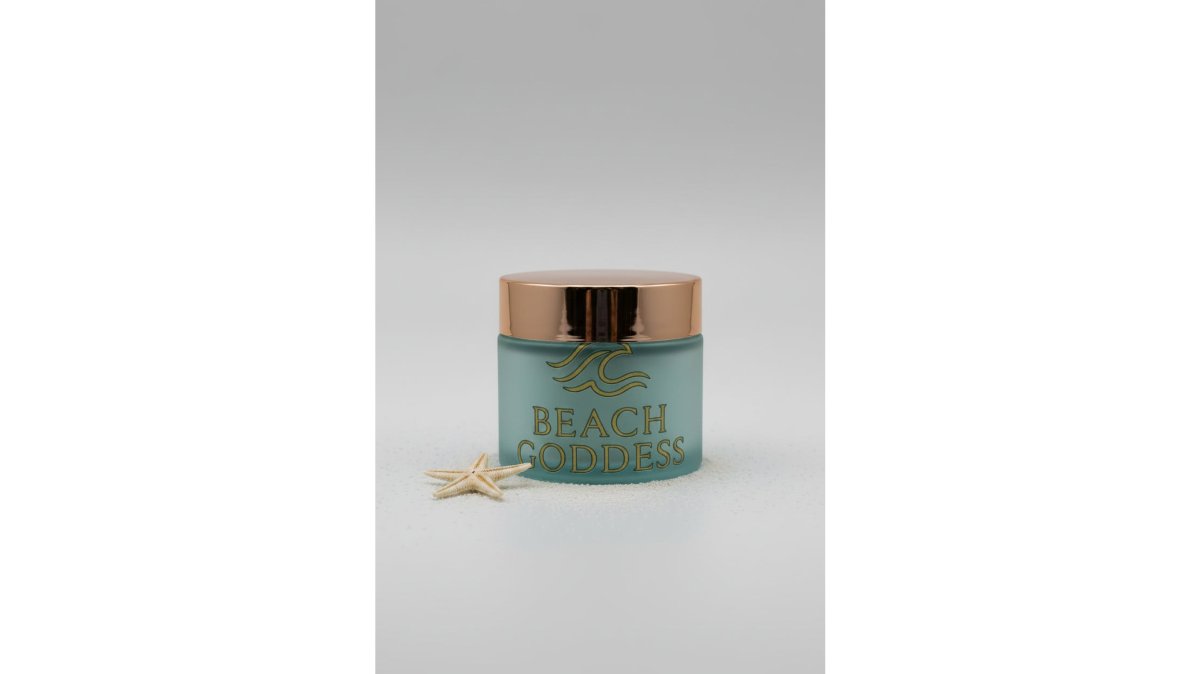
The Face Tallow is built on a smooth, creamy tallow base infused with six botanical oils, including blue tansy and arnica, and it arrives in a 2 oz jar.
Every jar is hand crafted when ordered.
Conclusion: Making a Confident Decision About Tallow Skincare
Whether tallow skincare causes breakouts comes down to your skin, not the ingredient's reputation. Dry, barrier-compromised skin often thrives on it; oily, easily congested skin often does not.
If tallow suits your skin, a short ingredient list, careful storage, and a formulation built on tallow and botanical oils rather than fillers will serve you best. If it doesn't, that is useful information too.
Frequently Asked Questions
Can beef tallow clog pores?
Beef tallow is a heavier, occlusive fat, and whether it clogs pores depends on your skin type and how much you apply. Oily and acne-prone skin may find it too rich, especially on the T-zone. If you want to try tallow skincare, start with a thin layer on one area, watch for new clogged pores over two weeks, and stop if congestion increases.
Is beef tallow good for acne-prone skin?
It can be for some people with dry or sensitive skin, because tallow is rich in fatty acids that support the skin barrier and lock in hydration. But beef tallow for acne-prone skin is not a guaranteed fit. If your breakouts are driven by excess oil and clogged pores, a heavy fat can make things worse. Patch test first and track your skin's response.
How should you patch test a beef tallow moisturizer?
Apply a small amount behind your ear or on your inner forearm twice daily for three to five days. If no redness or irritation appears, try a thin layer on one cheek for two weeks before using it on your whole face. Keep the rest of your routine unchanged so you can tell what is causing any reaction.
What should you do if tallow skincare causes breakouts?
Stop using it and give your skin two to four weeks to settle. Note whether the bumps are small clogged pores or deeper inflamed spots, and whether they appear where you applied the product. If the reaction is severe, painful, or spreading, see a dermatologist. A gentle cleanser and a light non-comedogenic moisturizer can help while your skin recovers.
Why did people stop using tallow in skincare?
Tallow fell out of favor as cheaper, longer-lasting synthetic ingredients and lighter lotions became common in the twentieth century. Many mass-market products also sit on top of the skin rather than absorbing. Interest in natural skincare has brought tallow back, especially for people who want fewer ingredients and richer barrier support.